Maximising Sales at Artisan Markets
A comprehensive guide for craft traders
Setting up your stall at local artisan markets can be a rewarding experience, but achieving desired sales and repeat business requires more than just showing up with your products. With over thirty years of experience in the craft and artisan market scene, I’ve gathered insights and strategies that can elevate your selling game. Let’s explore how to effectively market yourself and your products, focusing on some key elements.
Product – what will you sell?
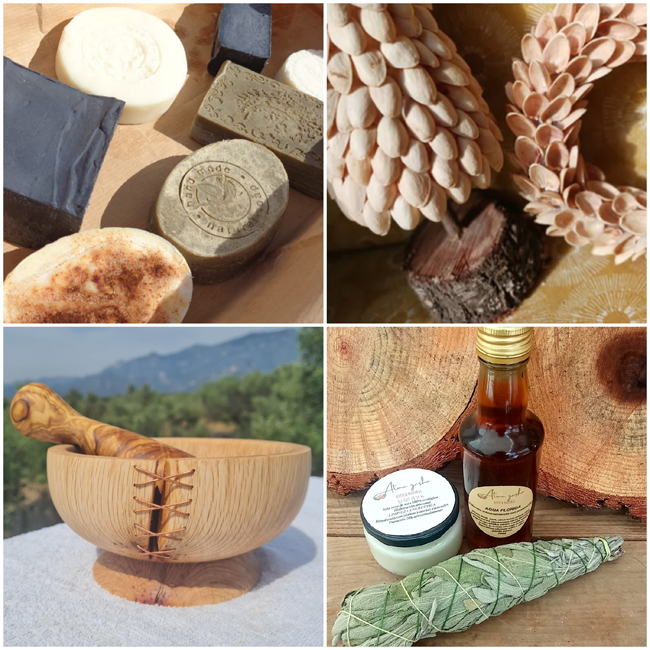
Your product is the cornerstone of your success. As an artisan, the uniqueness and quality of your goods can set you apart from mass-produced items. Understanding the distinction between what potential customers want and need is vital. A need is something that is essential to survival be that warmth, shelter, food, clothing etc if your product falls into this essential category than providing your price is competitive then sales are more likely. Wants are things that are desired to enhance your life, provide pleasure, or improve your quality of life, but are not essential for survival. To persuade potential customers to part with their money you need to make your product attractive enough, whether that is price, value for money, desirability, seasonality or some other distinction that sways them to buy.
A good way to determine where your products fall is to ask yourself “Can people live without my products?” If the answer is no, then your product is a need with a high likelihood of sales. If the answer is yes, but it is desirable then it is something that people may want and you have to provide added value to make that want into a need. One way to position your products this way is to align your offerings with current consumer trends, particularly regarding sustainability and local sourcing. For example eco credentials, locally sourced, reduced carbon footprint, upcycled, recycled, ethically produced. If your products cater to these growing desires, you’re likely to capture more interest on market days.
Price – the value of your product
Pricing is critical for influencing customer purchasing behavior. It’s essential to have a range of products at various price points to accommodate different budgets. Markets are often a springboard for sales if your product is generally high value so you need sample products to sell on the day and an online presence that they can come to for more expensive pieces. Although if you have card and online payment facilities this hurdle can be overcome. There is often concern about pricing on the stall itself, particularly with high value items but experience shows that clearly displaying prices on your stall can alleviate discomfort for potential buyers. If you’re concerned that higher prices may deter customers, share the story behind your product’s value—this justification can create a stronger connection and understanding of the price point. You can do this verbally as you interact, or with a storyboard framed showing the process, the time it takes to take the raw materials into the work of art you are selling, pointing them to your social media for video or short reels.

Place – location and seasonality
Selecting the right venue for your products is paramount. Not every market will suit your offerings, so carefully choose events where your target audience is likely to be present. Seasonal themes can also influence your product selection; for example, consider crafting holiday-themed items during peak seasons, or, incorporate your product into gift packs. Use these markets not only as sales opportunities but also as platforms to build your brand for future online interactions. Worth noting here that even the most lowly of market, like a car boot, attracts people from all socio economic groups, often looking for a bargain, vintage or antique or just doing their bit being eco conscious. Equally seasonal markets attract buyers who need to buy gifts and seasonal items for themselves, notice the word need, people are likely to spend more on others than themselves or for special occasions. So although you might consider a car boot or brocanters not the best place you might be surprised at the response, particuarly if you are prepared to demo, chat to people and offer small less expensive sample products.

Promotion – brand, marketing and incentives
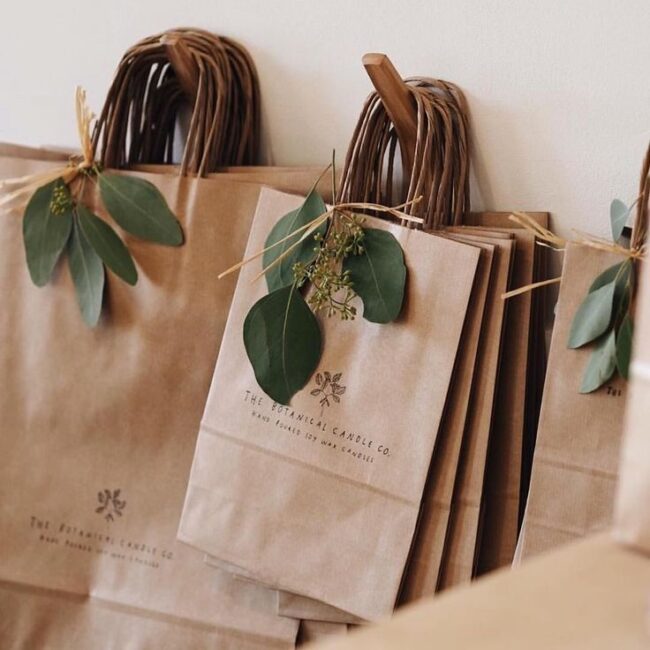
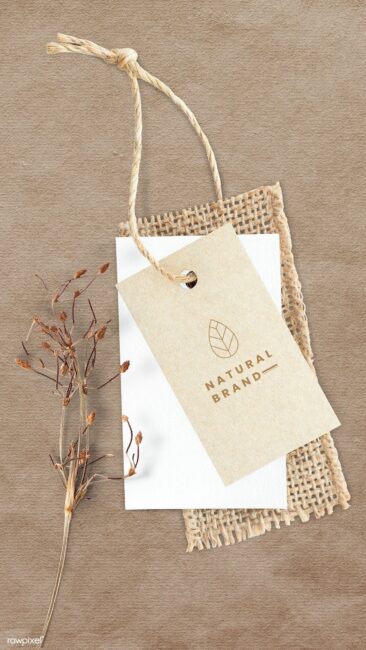
Promoting your products effectively is vital. Establish a cohesive brand identity with logos and taglines that reflect your unique selling proposition. Utilise social media and online platforms to create awareness about your products, encouraging engagement before and after the event. Additionally, incorporate promotional strategies such as discounts, giveaways, or loyalty programs to incentivise repeat purchases. Packaging is a relatively inexpensive way to get your brand noticed something as simple as brown paper bags or kraft carrier bags stamped with your logo, wrapping your product in tissue, hole punching and tying a business card to the bag handle, popping a leaflet in the bag. Useful free tools for designing logos, brand and printing are Canva, Freepik and Vistaprint
People – the face of your business
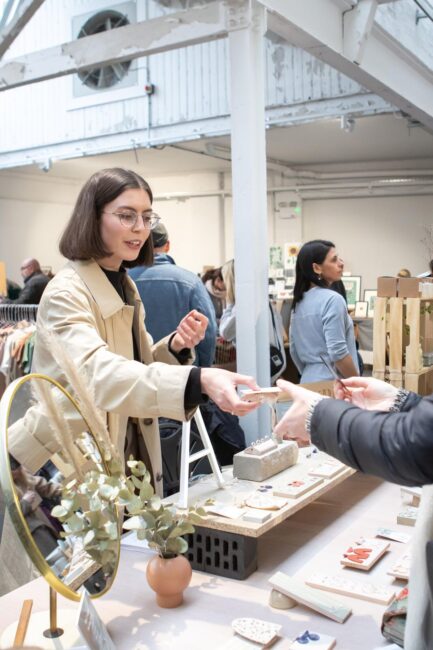
As the face of your business, your interaction with potential customers can significantly impact their purchase decisions. Make it a priority to engage with those browsing your stall. A simple smile, a welcoming demeanor, and attentive communication can create warmth and trust. Consider demonstrating your craft during quieter moments—this allows potential customers to witness your skills firsthand and encourages interaction without feeling pressured. If your product can be personalised easily this gives you another opportunity to interact with your customer and create a solely unique product for them. Use your online presence to interact by doing live recordings, reels, short videos, demos online workshops.
Process – from purchase to after sales
Streamlining the purchasing process is essential for customer satisfaction. There are multiple payment options available, including cash, card readers, and mobile payments, some may seem daunting involving technology but card readers are inexpensive now to purchase online or through your bank.Be aware that card payments often incur a charge so take that into consideration when pricing or passing that charge on. Provide clear information on your return policies and after-sale support. Slip a business card or thank-you note into each purchase to keep the lines of communication open, encouraging customers to reach out with questions or future orders.
Presentation – setting out your stall
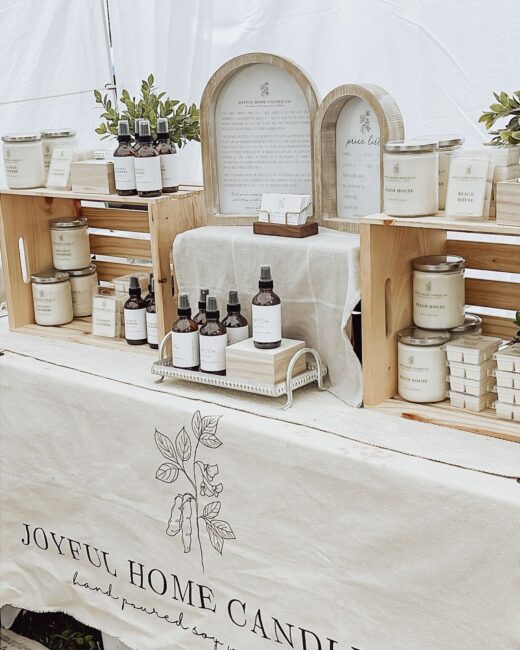
The presentation of your stall can greatly influence consumer perceptions. Aim for an organized, inviting setup that showcases your products effectively. Incorporate height and dimension to create visual interest, while ensuring everything is clean and accessible. Do not over clutter your space, give the customer room to take it all in, place items that you feel are most attractive at eye level. Use your table as a stage, get tips online not just from market traders but interior designers often have boards that show how to display items on bookshelves and in room settings, or, table settings. You don’t have to spend a fortune on display props, something as simple as carboard boxes used to bring your products to market, turned upside down with fabric over becomes a shelf or pedestal, using cardboard tubes covered in fabric for bracelet displays, egg cartons can be cut up and used as ring holders, twigs for and necklaces, inexpensive baskets for soaps. Battery operated fairy lights. Another way of displaying pricing is to use chalkboard paint on scrap wood and a chalkpaint pen which can be cleaned off and changed periodically. Imagination not big bucks is all you need to create an eye catching display, keeping your background fabrics and shelving as neutral as possible to let the products shine.
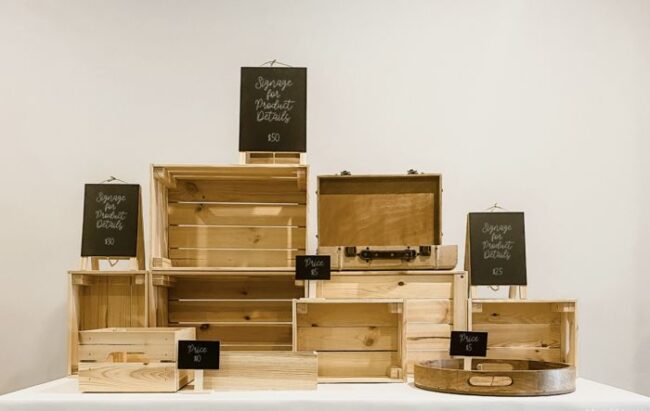
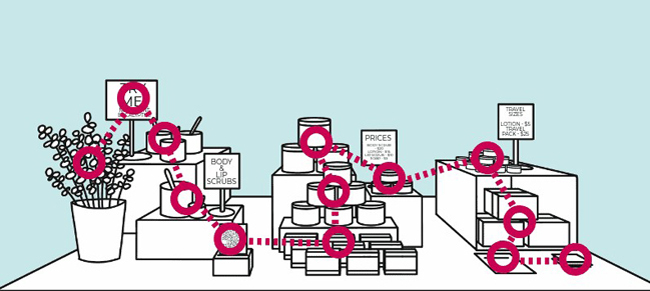
There is a science to display. In the western world people tend to scan left to right and top to bottom so place items in an order you want them to see things. Take inspiration from retail, they always put last minute and impulse buys by the tills, or, at the end of aisles, place yours at the last place they are likely to look at the payment point or bottom right. Remember, first impressions matter—your stall should reflect the quality of your products, drawing customers in through appealing displays and noticeable from a distance. Lots of ideas online (Pinterest and Google of props you can make or use to display your products cleanly) Less is more have spare stock underneath your table as items sell.
 Key Takeaways
Customer-Centric Approach – Always prioritise customer needs and experiences
Consistent Branding – Maintain a cohesive brand image across all materials and products.
Accessible Pricing and Payment = Ensure customers clearly see prices and have convenient payment options
Engaging Stall Design – Create an attractive and uncluttered space that invites exploration.
Effective Communication – Build relationships through friendly interactions and active engagement.
By implementing these strategies, you can maximize your market presence, boost sales, and foster lasting relationships with customers. Embrace the journey of being an artisan trader with preparation and creativity, and watch your efforts translate into success beyond the market day!
Coming soon – Essentials for Market Day!